
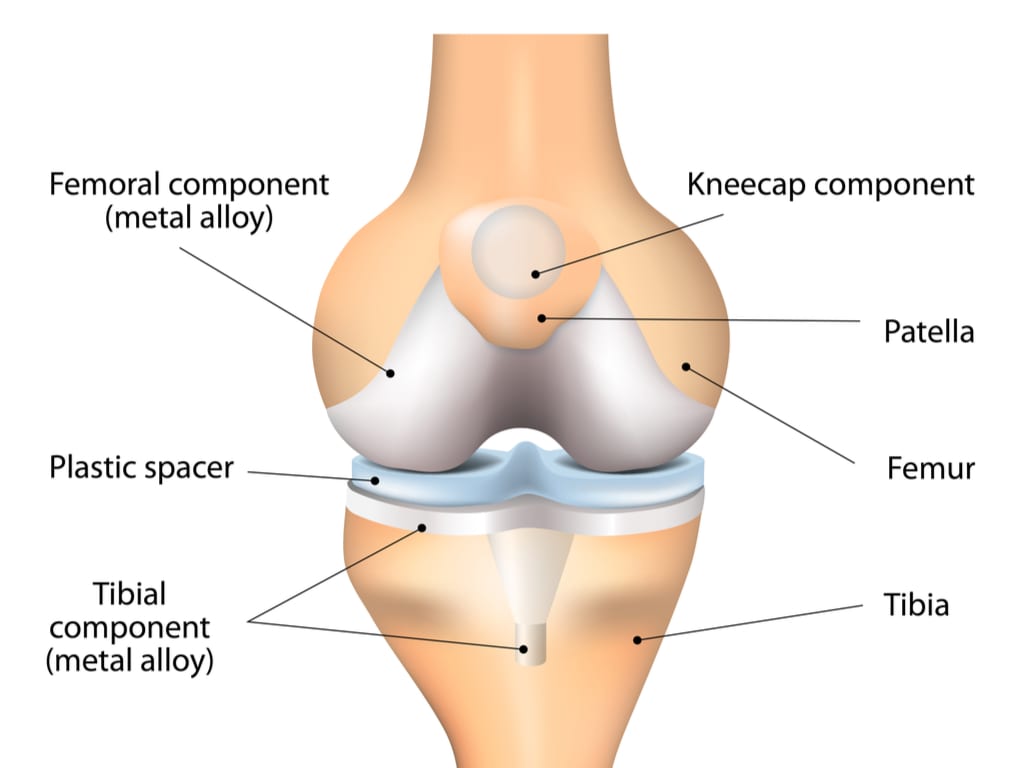
A knee replacement is a surgical procedure that involves replacing a diseased/damaged knee joint with an artificial joint or prosthesis.
What to expect after a knee joint replacement
Symptoms following a knee joint replacement will vary between people. Common symptoms typically include; swelling, pain and knee stiffness. Symptoms usually increase with weight bearing activity and bending of the knee, straightening or twisting of the knee. Patients may limp or avoid weight bearing to compensate for the pain. Knee stiffness and pain may also increase with rest and may present as an ache, especially in the mornings. Stiffness will result in a reduced range of motion at the knee, meaning you may struggle to fully bend or extend your knee. A feeling of knee weakness and instability follow a knee replacement surgery is also common.
How can physiotherapy help?
It is vital to follow up with physiotherapy after any type of musculo-skeletal surgery. We can assist to reduce pain and swelling. Our techniques can increase mobility at the knee joint by using treatment techniques such as joint stretching, soft tissue massage on surrounding structures and advise on relevant stretches. Furthermore, we can help address weakness at the knee by recommending strengthening exercises to ensure, moving forward, your knee is a strong as it can be to reduce the risk of any further injuries.
What to expect after a total knee replacement
A total knee replacement is a common and successful operation for advanced knee arthritis. Physiotherapy is a key part of getting the best result, helping you restore movement, rebuild strength and return to daily activities with confidence.
How long does rehabilitation take?
Most people make steady progress over the first three months, with continued gains up to a year after surgery. Early, guided exercise to restore knee bend and straightening is important, followed by progressive strengthening and walking.
How physiotherapy helps your recovery
Our physiotherapists guide you through each stage, from restoring range of movement and managing swelling to rebuilding strength and balance. A tailored programme helps you regain independence and get back to the activities you enjoy across Auckland’s North Shore.
What you can do at home
- Complete your prescribed exercises regularly to restore bend and straightening
- Use ice and elevation to manage swelling
- Gradually increase your walking as guided
Always follow the guidance of your surgeon and physiotherapist.
Frequently asked questions about knee replacement rehab
When should I start physiotherapy after surgery?
Rehabilitation usually begins very soon after your operation. Early, guided movement helps restore your knee and supports the best long-term result.
How soon will I walk again?
Most people are walking with support within days of surgery and build up steadily from there, guided by their physiotherapist.
Where can I get post-operative knee rehab on the North Shore?
Dynamic Physio provides knee replacement rehabilitation at our Mairangi Bay, Long Bay and Milford clinics.