
The meniscus is made of strong cartilage and is found in the knee joint between the bone ends of the femur (thigh bone) and tibia (shin bone). The function of the meniscus is to absorb shock, cushioning the impact of the femur on the tibia during weight-bearing activities. Normally the surface of the meniscus is smooth allowing friction free movement of the femur on the tibia. The meniscus however can become torn or damaged due to excessive weight bearing or twisting forces.
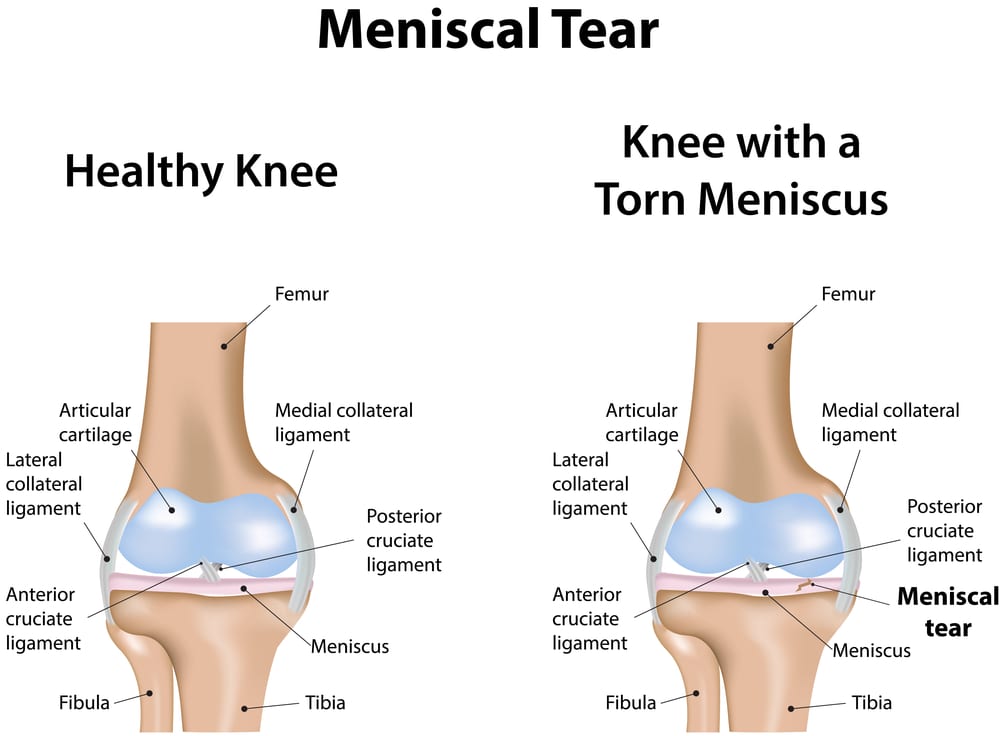
What are the symptoms of a meniscal tear?
Patients often experience a sudden, sharp pain within the knee at the time of injury. Swelling often occurs in the days following the injury. After the injury, pain is typically exacerbated with weight bearing activities and twisting movements of the knee. The knee may feel weak or unstable and may click, lock or give way during certain movements.
How can physiotherapy help?
Physiotherapy treatment for a meniscal tear is essential to ensure a full recovery. Treatment may include soft tissue massage, mobilisations (joint stretching), activity modification advise as well as exercises for strength and flexibility. When the meniscal tear is severe or will not heal efficiently with non-invasive physiotherapy treatment, we may recommend you to see a sports physician or orthopaedic surgeon. Physiotherapy then becomes important to guide post-surgery rehabilitation. Our therapists can assist to reduce pain, reduce swelling, increase strength of surrounding muscles and increase range of motion at the knee joint.
What causes a meniscal tear?
The meniscus is a C-shaped piece of cartilage that cushions and stabilises your knee. Tears usually happen in one of two ways: a twisting or pivoting force in younger, active people, or gradual wear (a degenerative tear) in adults over 40 whose cartilage has become less resilient.
- Twisting on a planted foot during sport
- Deep squatting or heavy lifting
- Age-related changes in the cartilage
How long does a meniscal tear take to heal?
Many meniscal tears settle with physiotherapy over six to twelve weeks, particularly degenerative tears, which often respond as well to rehabilitation as to surgery. Larger tears, or a knee that locks, may need a surgical opinion, and your physiotherapist can help you tell the difference.
What you can do at home
- Settle early swelling with ice and relative rest
- Avoid deep squatting and twisting while it is irritable
- Keep the thigh and hip muscles strong with prescribed exercises
Check with your physiotherapist before returning to sport or heavy activity.
Frequently asked questions about meniscal tears
Do I need surgery for a meniscal tear?
Often not. Many tears, especially degenerative ones, improve with a targeted strengthening programme. Surgery is usually reserved for a knee that keeps locking or catching.
Should I keep exercising with a meniscal tear?
Gentle, guided exercise is usually helpful, but sharp twisting and deep squats can aggravate the knee. A physiotherapist can tailor safe activity for you.
Where can I get knee physiotherapy on the North Shore?
Dynamic Physio treats knee injuries at our Mairangi Bay, Long Bay and Milford clinics, and our physiotherapists are ACC-registered.