
The shoulder joint is known as the Gleno-humeral joint, where the shoulder blade and humerus (upper arm bone) attach. There is significant connective tissue and several ligaments holding these bones together.
A ‘frozen shoulder’ typically refers to inflammation, scarring and tightening of the connective tissue surrounding the shoulder joint. Subsequently, this may result in shoulder pain and loss of shoulder movement.
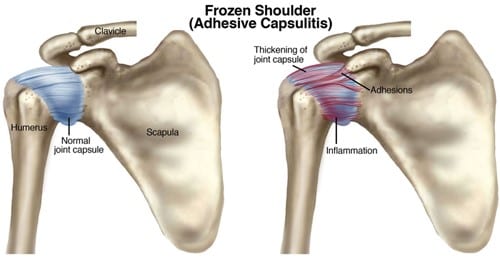
A frozen shoulder can typically be divided into 3 phases:
Phase 1: Pain = the shoulder becomes painful with most arm movements; you may also suffer from significant pain at night. During this phase the shoulder may also begin to stiffen.
Phase 2: Freezing = characterized by significant stiffness and loss of movement. This coincides with scarring of the shoulder joint connective tissues. Patients may find it difficult to elevate the arm or place their hand behind their back. Pain typically decreases during this phase.
Phase 3: Thawing = This is the final phase, the shoulder begins to ‘loosen’ up and movement to the shoulder is gradually restored.
How can physiotherapy help?
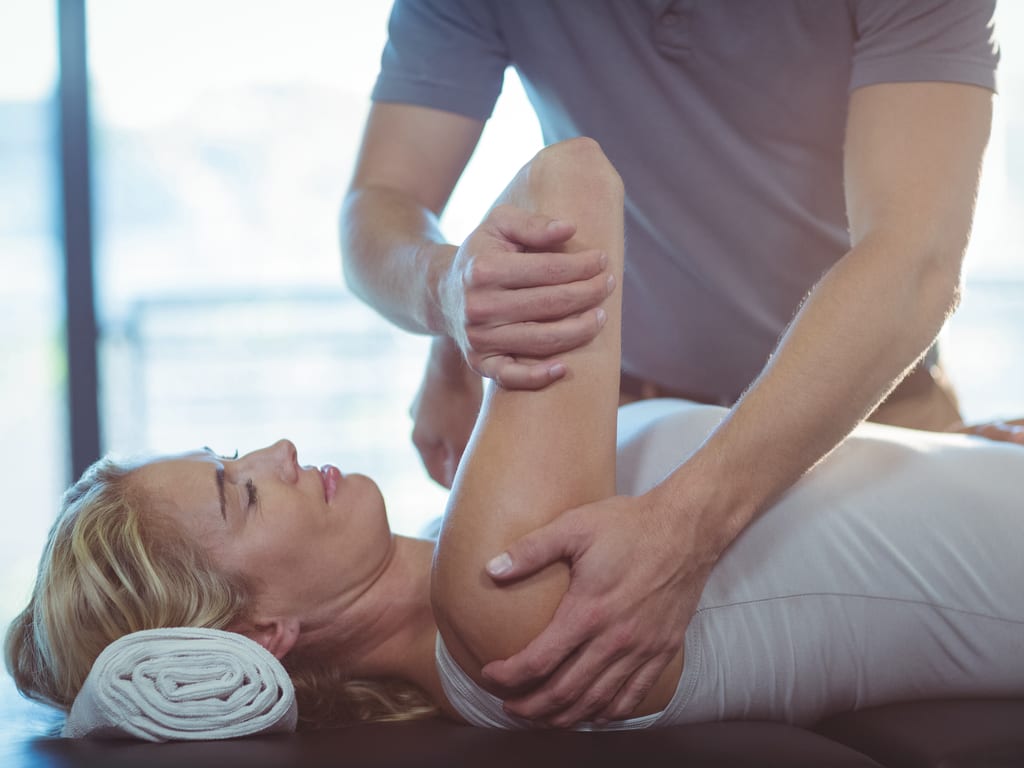
Physiotherapy treatment is vital for frozen shoulder. Treatment is focused on relieving pain and restoring the shoulder’s normal range of motion. Our therapists will advise you on anti-inflammatory management to reduce pain, as well as focusing on exercises that stretch the joint capsule to restore movement.
What causes a frozen shoulder?
Frozen shoulder, also called adhesive capsulitis, happens when the capsule around the shoulder joint becomes thickened, inflamed and tight, which reduces movement and causes pain. It often develops gradually and without a clear cause, though it is more common in people aged 40 to 60 and after a period of shoulder immobility.
- A period of reduced shoulder movement, for example after an injury or surgery
- Age (most common between 40 and 60)
- It can occur without any obvious trigger
How long does a frozen shoulder take to recover?
Frozen shoulder typically moves through three stages (painful, stiff and thawing) and can take many months to resolve fully. The good news is that physiotherapy can reduce pain, maintain as much movement as possible, and support a smoother return to normal use.
How physiotherapy helps
Our physiotherapists use hands-on techniques, targeted exercises and advice on managing daily activities to keep the shoulder moving and settle pain through each stage. A tailored programme helps you protect movement and recover more comfortably.
What you can do at home
- Keep the shoulder gently moving within a comfortable range
- Use heat before your exercises to ease stiffness
- Stay consistent with your prescribed gentle mobility exercises
Check with your physiotherapist before pushing into painful ranges.
Frequently asked questions about frozen shoulder
Will my frozen shoulder get better on its own?
Many do improve over time, but this can take one to three years. Physiotherapy helps reduce pain and restore movement more quickly and comfortably.
Should I keep using my arm?
Yes, gentle movement within comfort is important. Complete rest can allow the shoulder to stiffen further.
Where can I get help on the North Shore?
Dynamic Physio treats shoulder conditions at our Mairangi Bay, Long Bay and Milford clinics, and our physiotherapists are ACC-registered.