
Due to the structure of the shoulder joint, shoulder injuries are extremely common. Most commonly injured is the rotator cuff.
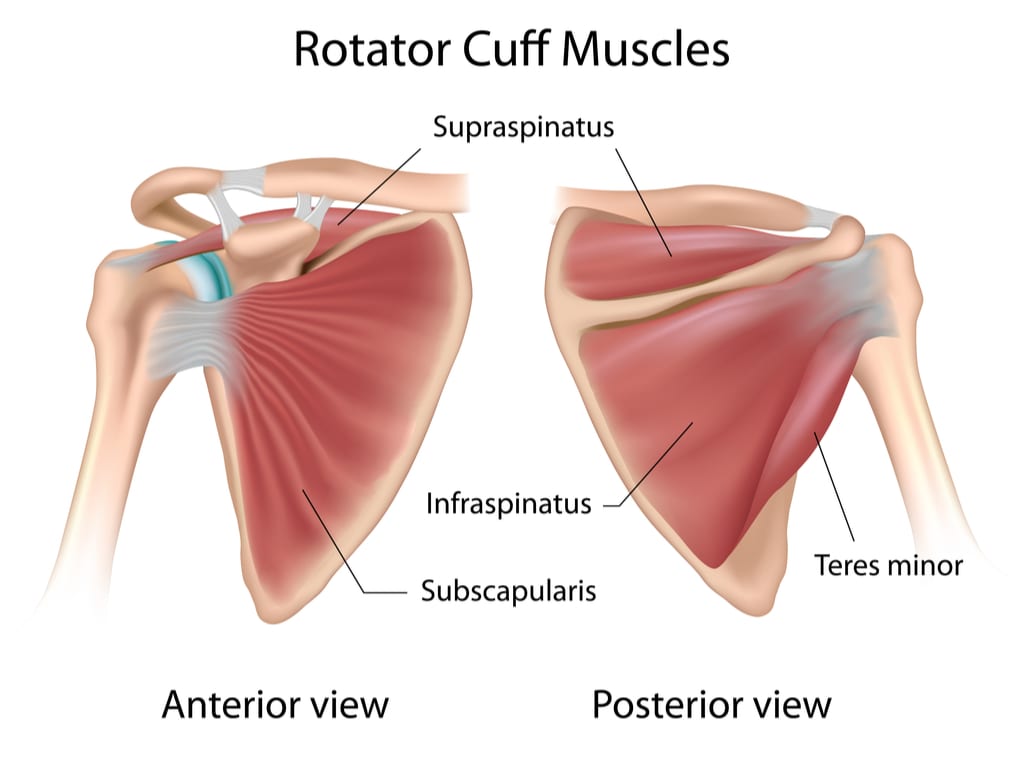
The rotator cuff refers to a set of four muscles that provide stability and movement to the shoulder.
These include the supraspinatus, infraspinatus, teres minor, and subscapularis muscles. Due to the lack of shoulder stability, the rotator cuff has to provide active muscular stability of the shoulder joint.
What are the causes and symptoms of a rotator cuff injury?
Rotator cuff injuries are caused by repetitive use, or trauma to the shoulder. Repetitive injuries are usually caused by continuous overhead movements of the shoulder. Specific injuries to the rotator cuff can occur during sudden lifting of heavy objects, falling on the arm or overstretching. Symptoms present as pain and stiffness into the shoulder that can radiate down the arm. Other symptoms can include weakness and loss of full movement.
How can physiotherapy help?
It is essential that treatment is sought immediately to reduce further damage and compensatory strategies. Most rotator cuff injuries will heal with appropriate professional management, however larger tears will require cortisone injection or referral on to a sports doctor.
Treatment would include soft tissue massage, joint mobilisation, acupuncture and exercise prescription to help strengthen the rotator cuff. This will ensure the return of stability back to injured site, enabling get you to return to pain free activity.
What causes a rotator cuff injury?
The rotator cuff is a group of muscles and tendons that stabilise and move your shoulder. Rotator cuff problems are the most common cause of shoulder pain in adults, and they can come from a sudden injury or, more often, gradual wear and overload over time.
- Repetitive overhead activity at work or in sport
- A fall or sudden strain on the shoulder
- Age-related changes in the tendons
How long does a rotator cuff injury take to recover?
Many rotator cuff injuries respond well to physiotherapy over six to twelve weeks, with a strengthening programme that restores the shoulder’s control and capacity. More significant tears may need a specialist opinion, and your physiotherapist can guide you.
How physiotherapy helps
Our physiotherapists assess your shoulder and build a progressive strengthening programme, supported by hands-on treatment and activity advice. Most people avoid surgery with the right rehabilitation.
What you can do at home
- Avoid painful overhead activities while the shoulder is irritable
- Keep the shoulder moving within a comfortable range
- Stay consistent with your prescribed strengthening exercises
Check with your physiotherapist before returning to heavy or overhead activity.
Frequently asked questions about rotator cuff injuries
Do I need surgery for a rotator cuff tear?
Often not. Many rotator cuff injuries, including some tears, improve with a structured strengthening programme. Surgery is usually considered for larger tears or when rehabilitation does not settle symptoms.
Should I rest my shoulder completely?
Usually not. Gentle movement and guided strengthening are important, as complete rest can lead to stiffness and weakness.
Where can I get shoulder physiotherapy on the North Shore?
Dynamic Physio treats rotator cuff injuries at our Mairangi Bay, Long Bay and Milford clinics, and our physiotherapists are ACC-registered.