
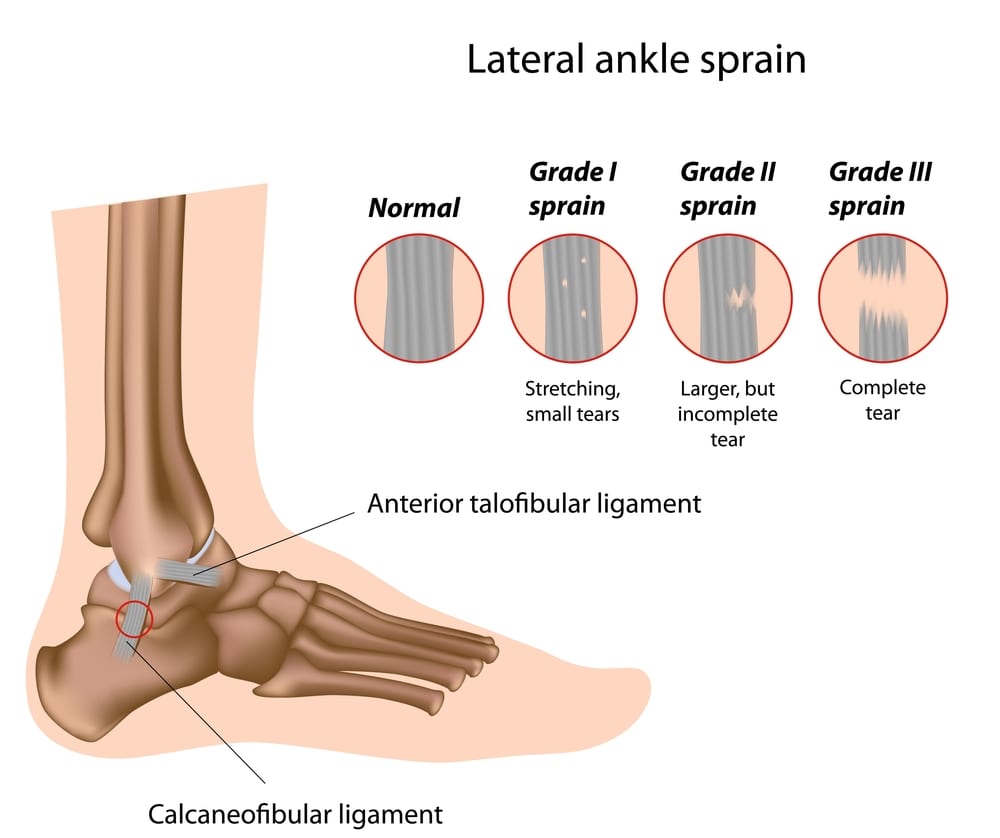
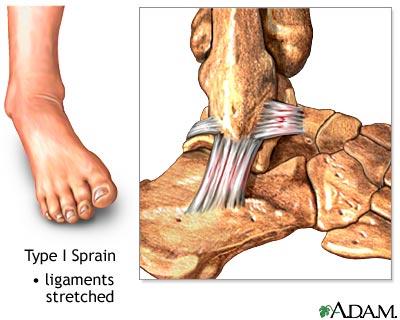
The most common type of ankle injury is a lateral ankle sprain. This refers to the stretching or tearing of ligaments of the outer side out of the ankle. The ligaments most commonly involved are the talo-fibula ligament and calcano-fibula ligament.
Other structures such as the peroneal muscle tendons that run down the side of the ankle may also be involved in a lateral ankle injury.
How does lateral ankle ligament injury happen?
Ankle sprains are usually caused by rolling of the foot onto its outer edge so that the sole of the foot is turned inwards. This causes the ligaments on the outer side to overstretch and tear. A lateral ankle sprain can occur by twisting your ankle while running on uneven surfaces or falling on the outside of your foot.
What should I do if I think I have a lateral ankle sprain?
Rest is the first thing you should do and aim to reduce the swelling by using the RICE method of treatment (Rest, Ice, Compression and Elevation). More information on the RICE method can be found on our “Acute Injury Management” information sheet.
How can physiotherapy help?
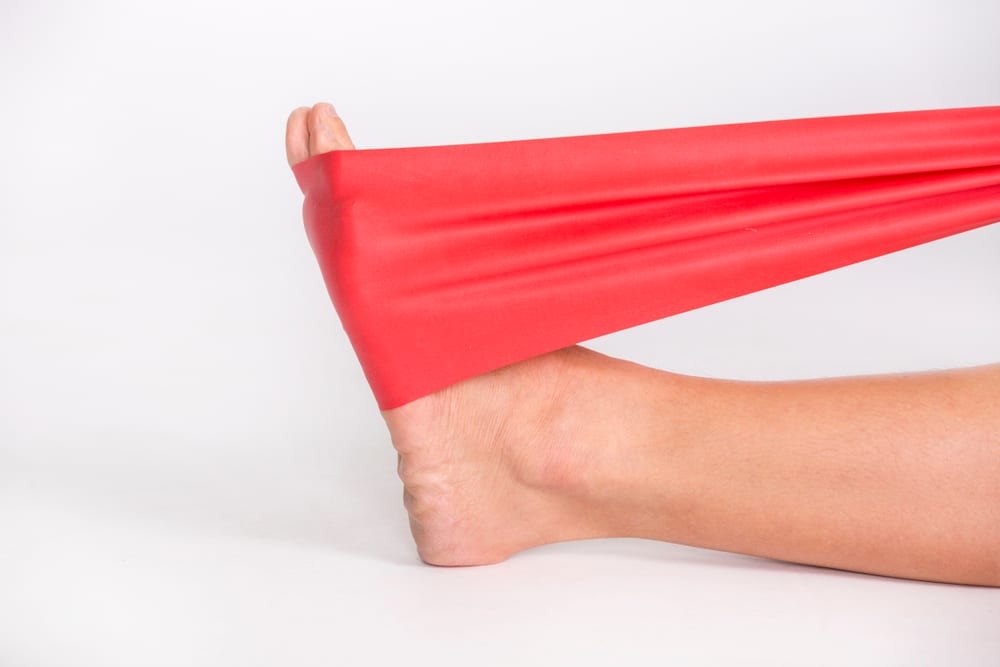
Physiotherapy can help you manage the initial stages of your acute ankle injury with techniques to help reduce pain and swelling. During the later stages our physiotherapist may use stretching techniques, friction massage, and acupuncture. An exercise rehabilitation program including balance exercises, strengthening would help return strength and stability back to your ankle.
What causes an ankle sprain?
An ankle sprain happens when the ligaments that support the ankle are stretched or torn, usually when the foot rolls inward on uneven ground, during sport, or after a misstep. It is one of the most common injuries we see, and the outer ligaments are most often affected.
- Rolling or twisting the ankle on uneven ground
- Sports involving jumping, cutting and quick changes of direction
- A previous ankle sprain, which increases the risk of another
How long does an ankle sprain take to heal?
Mild sprains often settle within two to six weeks, while more significant sprains take longer. Rehabilitation matters, because many people who do not complete proper rehab go on to have ongoing ankle problems.
What you can do at home
- Use the RICE approach (rest, ice, compression, elevation) in the first few days
- Start gentle movement early, as guided
- Keep up your prescribed balance and strengthening exercises
Check with your physiotherapist before returning to sport.
Frequently asked questions about ankle sprains
Should I walk on a sprained ankle?
Gentle, guided weight-bearing is usually encouraged early, as long as it is comfortable. Your physiotherapist can advise how much is right for you.
Why does my ankle keep spraining?
Repeated sprains are often due to reduced strength and balance after the first injury. A rehabilitation programme that restores these greatly reduces the risk.
Where can I get ankle care on the North Shore?
Dynamic Physio treats ankle injuries at our Mairangi Bay, Long Bay and Milford clinics, and our physiotherapists are ACC-registered.