
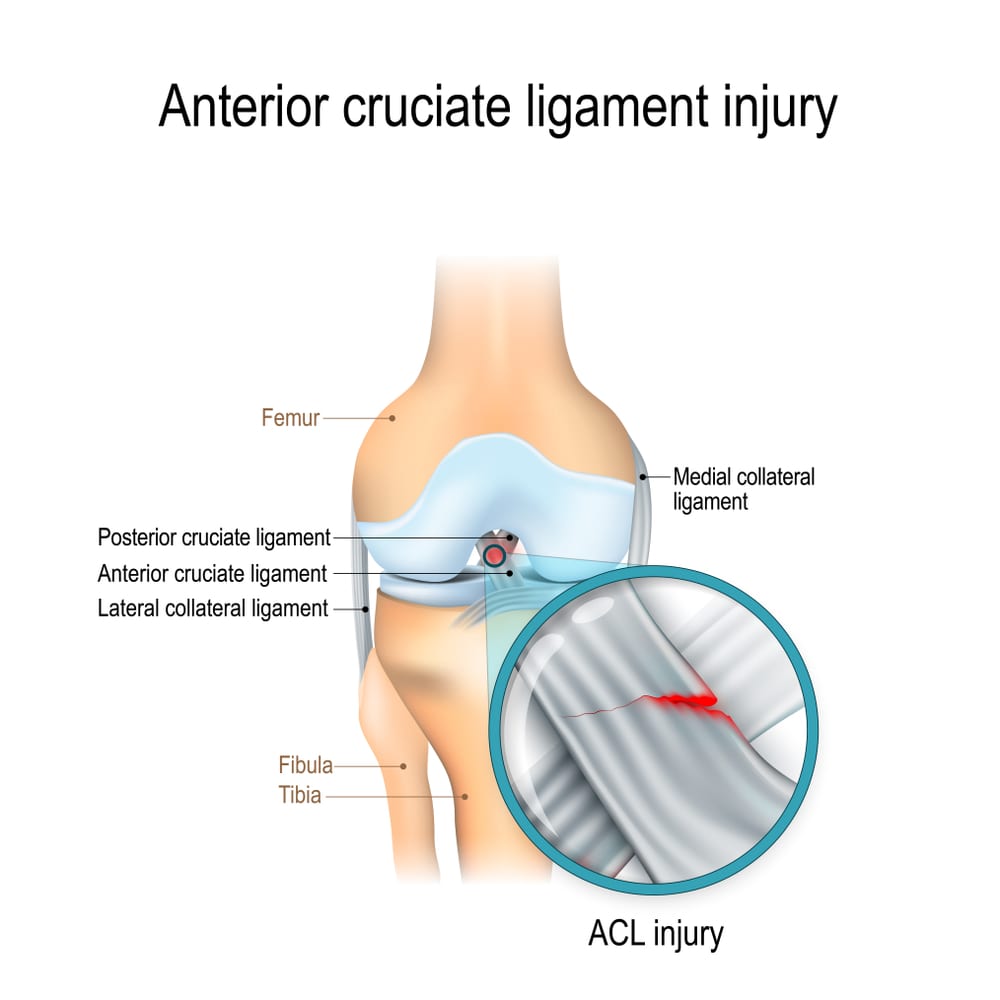
The knee is a hinge joint located where the end of the femur (thigh bone) joins to the tibia (shin bone).
The anterior cruciate ligament (ACL) is located inside the knee joint and stabilizes the joint by preventing it sliding forwards.
An ACL injury involves extreme stretching or tearing of this ligament in the knee. A hard twist, or excessive force on the ACL can tear it. As a result the knee gives way and can no longer support the body.
How does an ACL injury happen?
ACL tears can occur through contact or non-contact injuries. These include a direct blow to the side of the knee, changing direction while running, pivoting and jumping, or over- extending the knee.
What are the symptoms?
When you experience an ACL injury, you may experience hear or feel a ‘pop or ‘snap’ inside your knee joint. It is usually accompanied with immediate pain and swelling. Weight bearing through your leg may be difficult and you may experience giving way.
How can physiotherapy help?
The earlier the better! Rest is the first thing you should do and aim to reduce the swelling by using the RICE method of treatment (Rest, Ice, Compression and Elevation). Following up with physiotherapy is important. At Dynamic Physio we can assess your knee. If we suspect an ACL injury we can start on a course of muscle strengthening and rehabilitation exercises. We can also refer onwards to an orthopaedic surgeon if we suspect a full rupture.
What causes an ACL injury?
The anterior cruciate ligament is most often injured during a sudden change of direction, a pivot, an awkward landing, or a direct knock to the knee. It is one of the most common serious knee injuries in pivoting sports such as netball, rugby, football and skiing, which are popular across Auckland’s North Shore.
- Sports that involve cutting, jumping and rapid deceleration
- Reduced strength or control through the hip, thigh and calf
- Fatigue, or returning to sport after a long break
- A previous knee injury
How long does ACL recovery take?
Recovery depends on the severity of the tear and your goals. Many people manage a partial tear or a lower-demand lifestyle with a structured physiotherapy programme over three to six months. If you have an ACL reconstruction, a return to pivoting sport usually takes around nine to twelve months of progressive rehabilitation.
Do you always need surgery for an ACL tear?
No. Not everyone needs a reconstruction. The right choice depends on how unstable your knee feels, the demands of your sport or work, and whether other structures are involved. Our physiotherapists can assess your knee, help you weigh up your options, and use VALD strength testing to guide a safe return to sport.
What you can do at home
- In the early stage, use the RICE approach (rest, ice, compression, elevation) to settle swelling
- Avoid activities that make the knee give way
- Keep up the strengthening exercises your physiotherapist prescribes
Always check with your physiotherapist before progressing your exercises or returning to sport.
Frequently asked questions about ACL injuries
When should I see a physiotherapist after a knee injury?
As soon as possible. Early assessment helps settle swelling, protect the joint and start the right rehabilitation, which improves your outcome whether or not you have surgery.
Can I still walk with an ACL tear?
Many people can walk, but the knee may feel unstable or give way, especially on uneven ground or when turning. A physiotherapist can advise how to protect it while it settles.
Where can I get ACL rehab on the North Shore?
Dynamic Physio provides ACL rehabilitation at our Mairangi Bay, Long Bay and Milford clinics. Our physiotherapists are ACC-registered, so you may be able to claim for your treatment.