
Commonly known as “jumper’s knee”, patellar tendinopathy is a condition characterized by inflammation and tissue damage to the patellar tendon causing pain in the anterior region of the knee.
The quadriceps, located on the front of your thigh attach via the knee cap and the patellar tendon onto the tibia (shin bone).
The quadriceps muscle is particularly active during running, jumping and kicking. When contracting the quadriceps muscle, tension is placed onto the patellar tendon. When too much tension is placed through the tendon, due to repetition or high forces, damage to the patellar tendon may occur leading to inflammation, micro-tearing. Subsequent degeneration may also occur.
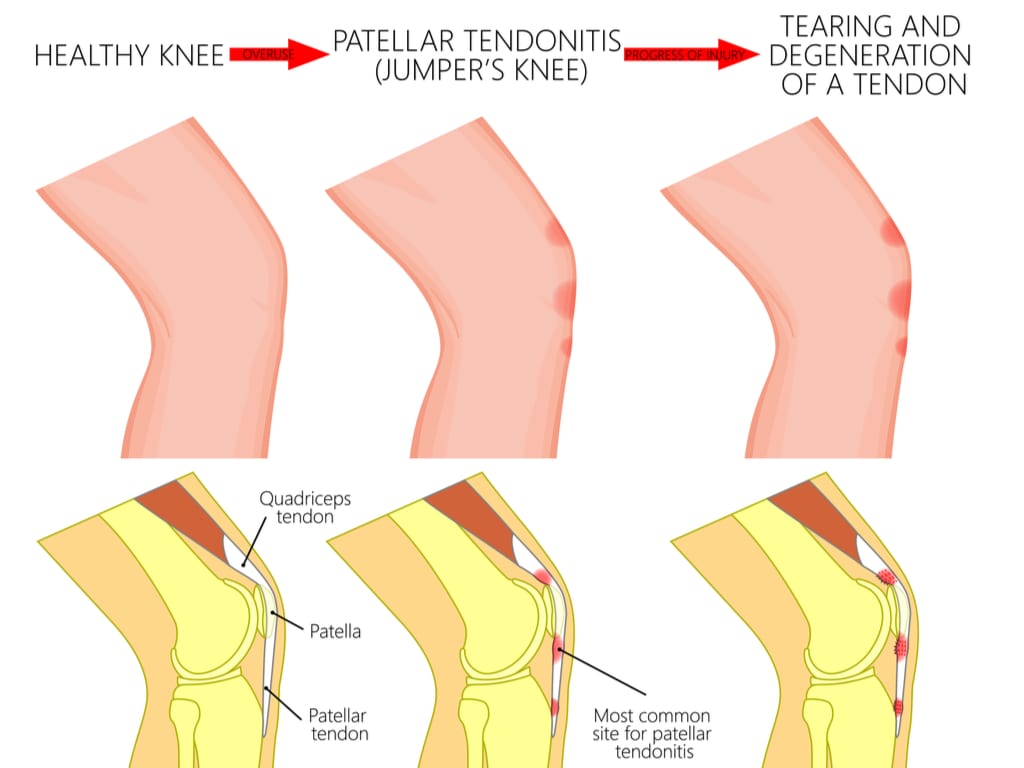
What are the symptoms of Patellar tendinopathy?
Pain develops gradually at the front of the knee just below the knee cap. Patients may only experience an ache or stiffness in the knee that increases with rest following activities requiring strong/repetitive contraction of the quadriceps muscle such as running or jumping. As the condition progresses, symptoms may increase during activity and affect performance. Walking or standing may be enough to aggravate symptoms. The knee may begin to feel weak and the patella tendon may become tender to touch.
How can physiotherapy help?
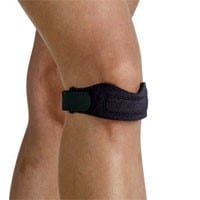
Patients who seek early physiotherapy treatment can expect the condition to heal well and return to their normal function in a few weeks. Rest from aggravating activities is an important component. Physiotherapy treatment may involve soft tissue massage, bracing, taping, ice or heat treatment, biomechanical correction, and a gradual return to activity programme involving stretching and exercises to improve strength.
What causes patellar tendinopathy?
Patellar tendinopathy, sometimes called jumper’s knee, is an overload injury of the tendon that connects your kneecap to your shin. It develops when the tendon is loaded more than it can recover from, and it is common in jumping and running sports such as basketball, volleyball and netball.
- A spike in jumping, running or training load
- Hard training surfaces and rapid changes in activity
- Reduced strength in the thigh and calf
How is patellar tendinopathy treated?
Tendons respond best to a progressive loading programme rather than complete rest. Your physiotherapist will build a strengthening plan that gradually restores the tendon’s capacity. Recovery is often measured in months rather than weeks, and consistency is the key.
Shockwave therapy for stubborn tendon pain
When a tendon has been painful for several months and has not responded to loading alone, shockwave therapy can help stimulate healing. Shockwave therapy is not funded by ACC, but Dynamic Physio offers it at affordable pricing, and we will let you know whether it suits your situation.
What you can do at home
- Reduce jumping and high-load activity for a period rather than stopping completely
- Keep up the loading exercises your physiotherapist prescribes
- Allow recovery time between heavy sessions
Check with your physiotherapist before increasing your training.
Frequently asked questions about patellar tendinopathy
Should I rest completely?
Usually not. Complete rest tends to weaken the tendon. Guided, gradual loading is the most effective way to rebuild it.
How long does patellar tendinopathy take to recover?
Many cases improve over three to six months with a consistent loading programme. Long-standing cases can take longer, which is where options like shockwave may help.
Where can I get treatment on the North Shore?
Dynamic Physio treats tendon injuries at our Mairangi Bay, Long Bay and Milford clinics, and our physiotherapists are ACC-registered.