

Posture physiotherapy in Auckland is one of the most common things we treat at Dynamic Physio — and it’s almost always the underlying cause of pain that patients have been putting up with for far too long. Poor posture doesn’t just look bad. It quietly overloads your muscles, compresses your joints, and creates a slow-building pattern of pain and injury that gets harder to fix the longer it goes unaddressed.
The frustrating thing is that most people already know their posture isn’t great. They’ve been told to sit up straight, they’ve bought a better chair, they’ve tried stretching before bed. But the pain keeps coming back — because posture problems aren’t fixed by willpower alone. They require a proper assessment of what’s actually driving the issue, and a targeted plan to address it.
That’s exactly what we do at Dynamic Physio across our Mairangi Bay, Long Bay, and Milford clinics. Here’s what poor posture actually does to your body, why it causes pain, and how physiotherapy corrects it properly.
What Poor Posture Actually Does to Your Body
Posture isn’t just about how you look standing in front of a mirror. It describes the position your body holds during every activity — sitting, standing, walking, working. When that position is consistently out of alignment, it changes the way load is distributed through your muscles and joints.
Think of it like a building that’s slightly off-centre. The structure might hold for a while, but over time the stress concentrates in the wrong places — and eventually something gives. Your body works the same way.
Common patterns we see at our North Shore Auckland clinics include:
- Forward head posture — where the head sits in front of the shoulders, placing up to 4x the normal load on the cervical spine
- Rounded shoulders — which overstretches the upper back muscles and compresses the front of the shoulder joint
- Anterior pelvic tilt — an exaggerated lower back arch that tightens the hip flexors and strains the lumbar spine
- Flat back posture — where the natural spinal curves are lost, reducing the spine’s ability to absorb shock
- Lateral imbalances — where one side of the body is habitually higher or more dominant than the other
None of these patterns cause immediate, dramatic injury. They cause slow, cumulative damage — the kind that turns into chronic back pain, persistent neck stiffness, recurring headaches, and shoulder problems that seem to come from nowhere.
The Most Common Pain Conditions Caused by Poor Posture
Neck Pain and Stiffness
Forward head posture is the leading postural driver of neck pain. For every inch your head moves forward from its neutral position, the effective weight your cervical spine must support roughly doubles. The muscles at the base of your skull and across your upper shoulders are constantly working overtime — and over time they fatigue, tighten, and refer pain upward into the head and downward into the shoulders.
Tension Headaches and Cervicogenic Headaches
Tight upper neck muscles and restricted cervical joints are a primary cause of recurring headaches. If you regularly get headaches that start at the base of your skull or behind your eyes, poor posture is very likely involved.
Sustained poor sitting posture — particularly anterior pelvic tilt and lumbar flexion — compresses the lumbar discs, strains the posterior ligaments, and gradually weakens the deep stabilising muscles of the core. The result is the kind of lower back pain that feels fine in the morning but builds through the day.
Shoulder Pain
Rounded shoulder posture progressively tightens the pectorals, weakens the mid and lower trapezius, and narrows the subacromial space at the top of the shoulder joint. Over time this leads to rotator cuff irritation, shoulder impingement, and pain that creeps into the arm — often misattributed to something else entirely.
Hip and Knee Pain
Postural imbalances in the pelvis affect the alignment of the hip and knee joints below. Weak glutes, tight hip flexors, and altered pelvic position change the mechanics of how you walk, run, and squat — placing abnormal stress on the hip and knee joints that eventually leads to pain and injury.
How Posture Physiotherapy in Auckland Corrects the Problem
The reason posture problems are so persistent is that they’re rarely just about one thing. Poor posture is usually the result of a combination of muscle tightness, muscle weakness, joint restriction, and movement habit — all reinforcing each other. Fixing it properly means addressing all of those layers, not just one.
At Dynamic Physio, posture physiotherapy in Auckland starts with a thorough assessment. Your physiotherapist will observe your posture in standing and sitting, assess your movement patterns, test the strength and length of key muscle groups, and identify the specific factors driving your postural dysfunction. From there, treatment is built around your individual findings.
Manual Therapy and Joint Mobilisation
Stiff joints in the cervical and thoracic spine are one of the most common contributors to poor posture — and one of the most overlooked. When joints are restricted, the body compensates by moving differently, which creates new postural patterns and new pain. Manual therapy restores normal joint movement, allowing the muscles to work properly and the body to find better alignment.
Soft Tissue Release
Chronically tight muscles — the pectorals, hip flexors, upper trapezius, and suboccipitals — need to be released before they can be re-educated. Your physiotherapist will use targeted massage and myofascial techniques to address the specific muscles that are holding your posture in a dysfunctional pattern.
Postural Re-Education and Targeted Exercise
This is the most important part of lasting postural correction. Releasing tight muscles helps, but without strengthening the muscles that have become weak and inhibited — the deep neck flexors, mid-back, lower trapezius, and glutes — the old pattern will return. Your physiotherapist will prescribe a specific exercise programme targeting your individual weaknesses, designed to fit into your daily routine without requiring gym equipment.
More techniques
Dry Needling and Acupuncture
For patients with significant muscle tension driving their postural problems, dry needling provides fast, targeted relief. Fine needles are used to release trigger points in chronically tight muscles — reducing pain and allowing the surrounding muscles to activate and work properly again.
Workstation and Lifestyle Advice
Even the best physiotherapy treatment won’t hold if you return to the same environment that created the problem. Your physiotherapist will review your workstation setup, sleeping position, and daily movement habits — and give you specific, practical recommendations to reduce the postural load on your body between sessions.
Why Posture Problems Don’t Fix Themselves
A lot of people assume poor posture will sort itself out if they just try harder to sit up straight. It doesn’t work that way — and there’s a good physiological reason for that.
When a muscle has been in a shortened or lengthened position for a long time, it adapts to that position. The nervous system starts to treat the dysfunctional posture as the new normal. Simply deciding to hold yourself differently requires constant conscious effort — effort that disappears the moment you get distracted by your work, your commute, or your life.
Real postural correction requires changing the underlying muscle length, joint mobility, and motor patterns that are sustaining the dysfunction. That’s what posture physiotherapy in Auckland at Dynamic Physio is designed to do — and why it produces lasting results where willpower alone doesn’t.
The short answer is: most people can benefit from posture physiotherapy in Auckland
The short answer is: most people. But posture physiotherapy is particularly valuable for:
- Office workers and remote workers spending 6–8+ hours a day at a desk
- Tradies and manual workers whose jobs involve repetitive asymmetrical movements
- Students spending long hours studying or on devices
- Athletes whose performance is being limited by movement imbalances
- Anyone with recurring pain that keeps coming back despite treatment
- People who want to address postural problems before they turn into something more serious
You don’t need to be in significant pain to benefit from a posture assessment. In fact, the earlier you address postural issues, the faster and more straightforward the correction tends to be.
What to Expect at Your First Posture Assessment at Dynamic Physio
Your first appointment at any of our North Shore Auckland clinics will last around 45–60 minutes. Your physiotherapist will start by taking a full history — understanding your symptoms, your daily routine, and what you’ve already tried.
From there they’ll carry out a physical assessment: observing your posture in standing and sitting, testing your range of movement, assessing muscle strength and flexibility, and identifying the key drivers of your postural dysfunction.
By the end of your first appointment you’ll have a clear understanding of what’s causing your pain, a treatment plan to address it, and a realistic idea of how long recovery is likely to take. No guesswork — just a clear plan based on what your body actually needs.
Frequently Asked Questions — Posture and Physiotherapy Auckland
Can physiotherapy actually fix poor posture?
Yes — but it takes a combination of hands-on treatment and targeted exercise to produce lasting change. Physiotherapy addresses the joint restrictions and muscle imbalances that are sustaining the poor posture, while a personalised exercise programme builds the strength and endurance to maintain better alignment long term.
How long does postural correction take?
It depends on how long the postural pattern has been established and how severe it is. Most patients notice meaningful improvement within 4–6 sessions. Full postural correction — where the new pattern becomes automatic — typically takes 2–3 months of consistent effort. Your physiotherapist will give you a realistic timeline at your first appointment.
Do I need a referral to see a physiotherapist about my posture?
No. You can book directly at any of our Dynamic Physio North Shore clinics without a GP referral. We’re open from 7am Monday to Friday with same-week appointments regularly available.
More FAQs
Is posture physiotherapy covered by ACC?
Posture-related pain that has developed gradually over time is generally not ACC-funded, as ACC covers injuries from specific accidents. However, if your postural issue was triggered or worsened by a specific incident at work or elsewhere, it may qualify. Many private health insurers including Southern Cross and NIB cover physiotherapy — check your policy or ask our team.
Can I fix my posture at home without seeing a physio?
You can make helpful changes — taking regular movement breaks, improving your workstation setup, doing general stretching. But without knowing which specific muscles are tight and which are weak in your case, home efforts tend to be hit and miss. A proper assessment means your exercises are targeted at exactly what your body needs, which produces faster and more lasting results.
Is poor posture causing my headaches?
Quite possibly — it’s one of the most common causes of recurring tension headaches and cervicogenic headaches that we see at Dynamic Physio. Tight upper neck muscles and restricted cervical joints from sustained poor posture refer pain into the head and face. Physiotherapy that addresses the neck is often highly effective for these types of headaches.
Book a Posture Assessment at Dynamic Physio — North Shore Auckland
If poor posture is causing you pain — or you want to get ahead of it before it does — our team at Dynamic Physio is ready to help. We offer posture physiotherapy across Auckland’s North Shore at our Mairangi Bay, Long Bay, and Milford clinics, with same-week appointments regularly available and no referral required.
Dynamic Physio Mairangi Bay
386 East Coast Road, Mairangi Bay, Auckland | Ph: 09 476 2166
Dynamic Physio Long Bay
55a Glenvar Ridge Road, Long Bay, Auckland 0630 | Ph: 09 553 8501
Dynamic Physio Milford
215 Shakespeare Road, Milford, Auckland 0620 | Ph: 09 869 6997
Open from 7am Monday to Friday. Book online or call your nearest clinic — same-week appointments are often available.
Dynamic Physio — Physiotherapy North Shore Auckland
Mairangi Bay | Long Bay | Milford | dynamicphysio.co.nz
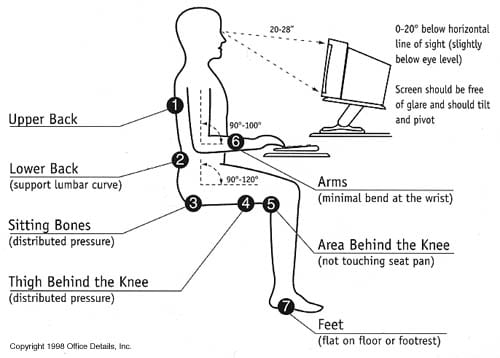
Do you already have aches and pains caused by sitting at a desk? The Dynamic Physio team can help, trust us we see this ALL THE TIME. Make an appointment today, and we’ll get you feeling like yourself again.